Search

Jamie Davis Writes

Category

Book Reviews and Author Interviews

Notes From a Reading Journal: Little Fires Everywhere, by Celeste Ng 

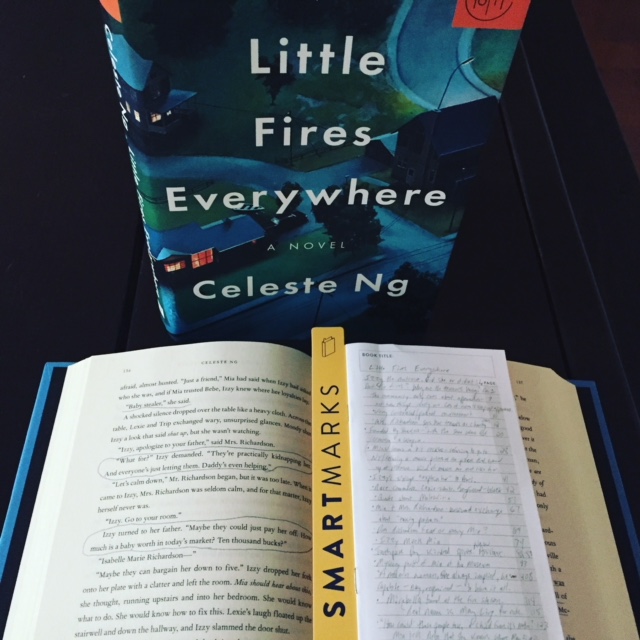
Notes from Smartmarks by BestSelf Co, while traveling without my reading journal. These bookmarks with notes were the perfect travel solution for me! At home, I keep a reading journal for my notes, but I was able to tear my notes out when I got home and filed them within my reading journal. The Smartmarks were very convenient! 

This selection was an extra purchase I made through Book of the Month Club after hearing so much buzz about the book. I found “Little Fires Everywhere” to be an absorbing book, guaranteed to make you think and spark debate among book club members everywhere. 

At first, I thought the book was going to be focused more on Izzy and her alleged “craziness,” as her siblings refer to her issues, but it was more of a character study of Izzy’s entire family (the Richardsons) and their new tenants, artist mother Mia and her daughter, Pearl. By the way, Izzy is not “crazy,” she just doesn’t fit into the cookie-cutter mold her family wishes to mold her into.

While there were plenty of witty and even positive exchanges in the story, make no mistake about it, this is no fairy tale happy ending of a story. Ideas to spark discussion come from such themes as: teenage pregnancy; adoption; what lies beneath the “perfect” neighborhood; what makes someone a mother; and what is heartbreak. What are the things that we carry with us? 

What are the sacrifices we make in the pursuit of a better life? Were they worth it?

The story takes place in Shaker Heights, a planned community that has lots of rules, and is the embodiment of a neighborhood that is really only concerned with the surface being perfect, and damn what lies beneath! 

In my opinion, the most evil character is do-gooder suburban mother Mrs. Richardson. She ruins lives by her interference. She never does a good deed without calculating it for a return favor later, and if she does something she deems “good” for another person, she expects the recipient to kowtow to her. And oh, how judgmental she is. Mrs. Richardson actually may take the nomination for most-hated literary character this year. 

Mia, the artistic mother, is highly gifted, but will not “sell out” when it comes to her art. Thus, she provides a poverty-stricken, nomadic lifestyle for her daughter, Pearl. Yet, she somehow always manages to supplement her artist’s income with menial jobs, and while they are not rich in material goods, they don’t seem to go without the necessities. This is a huge debate for readers to discuss. What is the parental obligation to provide for a child? If you have the ability to generate a lot of income, what is your obligation to make money if you are able? To what extent does security and stability come in to play over adventure and art when raising a child on your own? We know that Mia had the talent and the connections in Manhattan to make a great deal of money as an artist, but she did not want to sell out. (Arguably, she may have been worried about becoming too high-profile because then she may have caught the attention of the Ryans, which if you have read the book, you know she had to stay hidden).   

Another big issue for debate is what readers think of Bebe giving up May Ling and then the custody battle between her and the adoptive parents, Linda and Mark McCullough. Do you think the judge’s ruling was fair? What do you think about Bebe’s actions in the end of the book? Are there circumstances so severe that people no longer deserve a second chance?

The way Ng interweaves the story of Mia and Bebe is masterful. I was engaged, and wanted to keep reading to find out Mia’s secrets. 

Other relationships and questions to discuss: the relationship between Mia and her parents; what you think of the relationship between Mia and the Ryans; does Lexie regret her big decision; and who does Pearl’s heart break for – the loss of the relationship with Trip or with Moody? What do you think happens to Izzy in the end? 

Quotes I Collected for my Reading Journal:

·      Page 245: “You’ll always be sad about this, Mia said softly. But it doesn’t mean you made the wrong choice. It’s just something that you have to carry.” 

·      Page 250: “The question is whether things are still the same. Whether she should get another chance… Most of the time, everyone deserves more than one chance. We all do things we regret now and then. You just have to carry them with you.” 

·      Page 295: “Sometimes, just when you think everything’s gone, you find a way… Like a prairie fire. I saw one, years ago, when we were in Nebraska. It seems like the end of the world. The earth is all scorched and black, and everything green is gone. But after the burning the soil is richer, and new things can grow… People are like that, too, you know. They start over. They find a way.”
Notes From a Reading Journal: Before the Devil Breaks You, by Libba Bray 

Notes from a Reading Journal

Before the Devil Breaks You” is Book 3 in the 4-part Diviners series by Libba Bray.

There is a lot going on in Book 3! I adore this 1920s paranormal series! Libba Bray acknowledges that at the time she was writing this book, there was a lot going on in America politically, and I think she strikes the perfect balance of writing for entertainment without preaching politically. That’s a hard thing to do, by the way. Having just finished Stephen and Owen King’s “Sleeping Beauties,” even recognized masters get this wrong. There is entertainment, and then there are political pieces masked as entertainment. Ahem. But I digress…  

First, the “fun” elements in the plot of “Before the Devil Breaks You.” The Diviners visit an asylum to hunt ghosts, and there is ghostly activity around Manhattan that might remind the reader of the movie “Ghost-Busters”. I also enjoyed learning the lingo from that time period. The characters say such phrases as: 

         “You jake?”

         “Strictly top-drawer”

         “Baby Vamp”

         “And how!”

         “On the level”

         “Let’s ankle”  

Now on the darker fare. The King of Crows is back with an army of the dead. I’m still trying to figure out what the “Eye” is, but it sounds to be some sort of portal between Earth and another dimension (seemingly the land of the dead or wherever The King of Crows comes from. Hell? Because without question, The King of Crows is a demon). I think the “Eye” is going to be the focus of the last book as far as the Diviners are supposed to find it and destroy it, thus finally closing the entry door of Earth to The King of Crows. I got the impression that it has to do with Marlowe and his quest to discover and conquer another dimension. Marlowe is just about evil personified on Earth!

In the book, we delve deeper into Project Buffalo’s roots inside the Department of Paranormal, a former government agency. This agency’s purpose was to engineer Diviners in the womb, in an attempt to breed a race of super-powered Americans. Just as in the real 1920s Eugenics Record Office at Cold Spring Harbor Laboratory on Long Island, which Bray writes in her author’s note, “supported by Harrimans, Carnegies, and Rockefellers.” This story line is absolutely terrifying and evil, and even more so because it is based on reality!

We find out that Evie; Theta; Henry; Sam; Ling; Memphis; and Isaiah were all manufactured to have super powers that were derived by administering Marlowe’s serum to their mothers. The specific power that would develop as a result of administering the serum seems to be something that the agency could not control. 

The portrayal of the Manhattan State Hospital for the Insane was inspired by a fictional amalgam of real New York Kirkbride asylums and their cemeteries, such as Ward’s Island; Roosevelt Island; and Hart’s Island. I liked the mention of Nellie Bly’s 1887 “Ten Days in a Mad-House” to demonstrate how investigative journalism led to sweeping reform in the state’s asylums, and led to much better care of the mental ill by the 1920s. However, there were still terrifying things going on, and one of the scariest things was sterilization under the Supreme Court’s 1927 ruling in Buck v. Bell. 

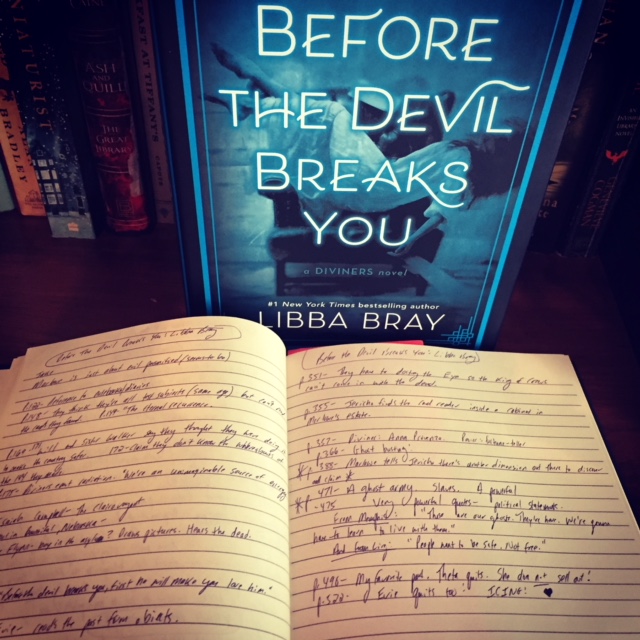
Quotes I Collected in my Reading Journal:

·      Page 12: “When you talk about seeing ghosts, most people assume you’re either crazy or drunk or both.”

·      About writing, from Ling’s perspective. Page 51: “Ling cracked open the notebook, inhaling the scent of good leather and of the possibilities lurking in all those blank pages.”   

·      P. 185: “Before the Devil breaks you, first he will make you love him.”

·      By Memphis, P. 475: “These are our ghosts. They’re here. We’re gonna have to learn to live with them.” And from Ling, “People want to be safe. Not free.”

Other revelations? Two main characters are murdered. We finally find out who Blind Bill Johnson is, and that’s a great story line (There once was a Diviner who could pull life from things…)! Evie and Theta both quit their show-business jobs rather than be forced to be controlled by their bosses, which were very inspiring actions. Shame about Jericho and Evie, though. I’ll leave it at that. I wish that part of the story didn’t have to happen.  — Jamie Whitmer

Pages From a Secret Diary Journal: Daniel Pink’s “Don’t List”

Confessions from the pages of a secret diary journal are pictured below. We all have way too many things on our weekly “To Do” list. Why not take a lesson from Daniel Pink and start your week with a “Don’t List?!” What a wake-up call!

Recently, a morning journaling pages exercise was done with Daniel Pink’s “Don’t List” project. The exercise of making a “Don’t List” is very freeing. The “Don’t List” is a conscious reminder of what’s really important and what we can do to take back some control over our daily lives and work flow. 

daniel-pink-dont-list

Some favorites from the “Don’t List” pictured above included:

1. Don’t be in such a rush to start your day that you don’t start first by doing your morning journaling pages. 

2. Don’t be distracted by the phone while working. Turn the ringer off. Return calls only after you have met your top three work tasks for the day. 

3. Don’t take meetings when the purpose can be accomplished by having a short call instead. 

This secret diary journal can be purchased here. 

Keeping a Reading Journal

Keeping a Reading Journal

Do you keep a reading journal? I do! I am currently using one of our secret diary journals to keep track of all my book details. I do use Goodreads, but I know from experience that you can’t trust a third-party to keep your records (you never know when the company could decide to fold and all of your records could be lost) or manage your personal details, so I also keep a master spreadsheet of books I’ve read, along with a few notes, as well as a reading journal. 

Pictured below are some sample pages that I use in my indexed reading journal. I like to keep a written record of some book quotes that particularly strike me. This list is from Mark Haddon’s “The Curious Incident of the Dog in the Night-Time.” I keep the index updated with the title of the book and date read or noted. If I REALLY loved something, I will also tab out the indexed reading journal so it stands out to me even faster when I go to search later. 

book-quotes-reading-journal

I also keep a list of anticipated book releases for the year, with space to highlight and note when I have pre-ordered. I just ordered Rachel Caine’s third installment of The Great Library Series, “Ash and Quill” this morning, and I am SUPER EXCITED ABOUT IT! The anticipated release date is July 11. Other books that I am eagerly awaiting for the rest of this year include: Sleeping Beauties (Stephen King and Owen King, expected release date: 9/26/17); Before the Devil Breaks You (Libba Bray, The Diviners #3, expected release date: 10/3/17); After the End of the World (Jonathan L. Howard, Carter & Lovecraft #2), expected release date: 11/14/17); and The Lost Plot (Genevieve Cogman, The Invisible Library #4, expected release date: 1/8/18).

reading-journal-anticipated-releases

I also manage and index a master list of “Must Reads” in my reading journal for the year, to keep better focused on what I for sure want to read for the year versus the Goodreads everything I ever marked to read list. I keep my working “must read” book list small, and will only update it once I have completed the 10 or so “must read” items. 

reading-journal-must-list

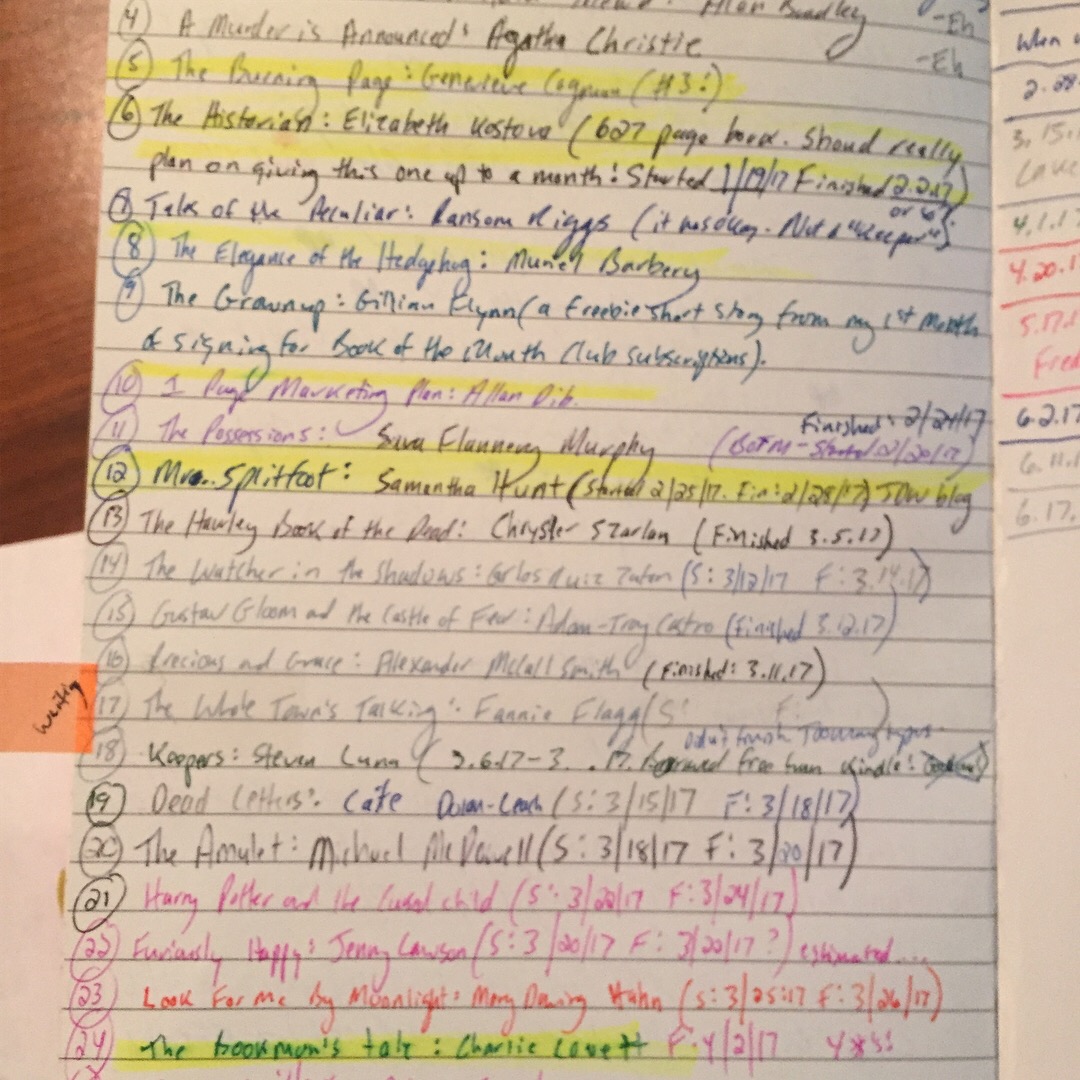
Lastly, I also keep a running list in my reading journal of books read for the year. I am already up to 50 for the year, and that’s about right for me. The picture below is the beginning of the list, and the items that I have highlighted are books that I particularly loved. I will also use highlighting on my master spreadsheet in case I want to go back and search that way to find authors I may want to research for composing other “must read” book lists! 

reading-journal-books-read

Yes, I am an obsessed (but highly organized) reader! And I love it. 

The Curious Incident of the Dog in The Night-Time is Like Reading a Secret Diary Journal

Mark Haddon’s The Curious Incident of the Dog in The Night-Time is like reading Christopher John Francis Boone’s secret diary journal! Sometimes funny, although not meant to be; and sometimes heart-wrenching, this is a new generation’s Catcher in the Rye. I was already writing down quotes and indexing them in my reading journal by Page 3: “And now if I don’t know what someone is saying, I ask them what they mean or I walk away.”

Literary Characters Who Kept Journals: Paloma Josse and Renee Michel (See The Elegance of the Hedgehog)

The Elegance of the Hedgehog – Muriel Barbery

Meet Paloma Josse, a twelve-year old affluent French girl who has decided to commit suicide before she reaches the age of thirteen because she is convinced that life has no meaning. Spoiler alert: the book has a tear-jerker ending, but not in the most obvious way that you might expect after reading the first sentence of this paragraph.

No, Paloma’s story is one of hope and redemption. A lesson in how to find the “always within never.”

The book switches perspectives from Paloma, who writes notes in her journal, to that of Renee Michel, the building’s concierge. I love the passage on Page 123 from Renee’s perspective that reads:  “What other reason might I have for writing this – ridiculous journal of an aging concierge – if the writing did not have something of the art of scything about it? …teaching me something that I neither knew nor thought I might want to know. This painless birth, like an unsolicited proof, gives me untold pleasure, and with neither toil nor certainty but the joy of frank astonishment I follow the pen that is guiding and supporting me.”

I loved how Paloma began writing her “Journal of the Movement of the World” as a way of recording beauty observed in her daily life. She began looking for a reason to live, and she found several reasons once she focused on that instead of getting lost in the nothing. Her “Profound Thoughts” obviously started off on the dark side, but she evolved. 

All in all, a powerful story of how just one or two people can change your life. And also, in a lot of ways, a story of how journaling can change a life. That may sound melodramatic to some of you.

However, if any of you, like Paloma, have ever been lost in the darkness; stuck in the never without an always; then you know. It isn’t just paper. It’s your redemption. It’s what you have. It is the tool that helps you find a reason, and then hopefully several reasons. 

Pictured with the book is The Fantastic Magician of Us, one of our Secret Diary Journals. Each indexed book journal features 186 pages that are ruled and numbered for your ease of use. The numbered pages with an index will help keep you organized and make it easy to find your important entries. To really make your brain sing, we recommend that you use tabs and update your book journal’s index as necessary immediately after you have completed your journaling.  

Secret Diary Journals are hardcover ruled notebooks made to resemble hardcover books that can easily be shelved in your living room or sit on a table at a coffee house without screaming: “I am a personal journal and I contain private thoughts. Pick me up and snoop!” Secret Diary Journals are designed to help you maintain your privacy when keeping your personal notes. 

On My Bookshelf: Ink and Bone, by Rachel Caine

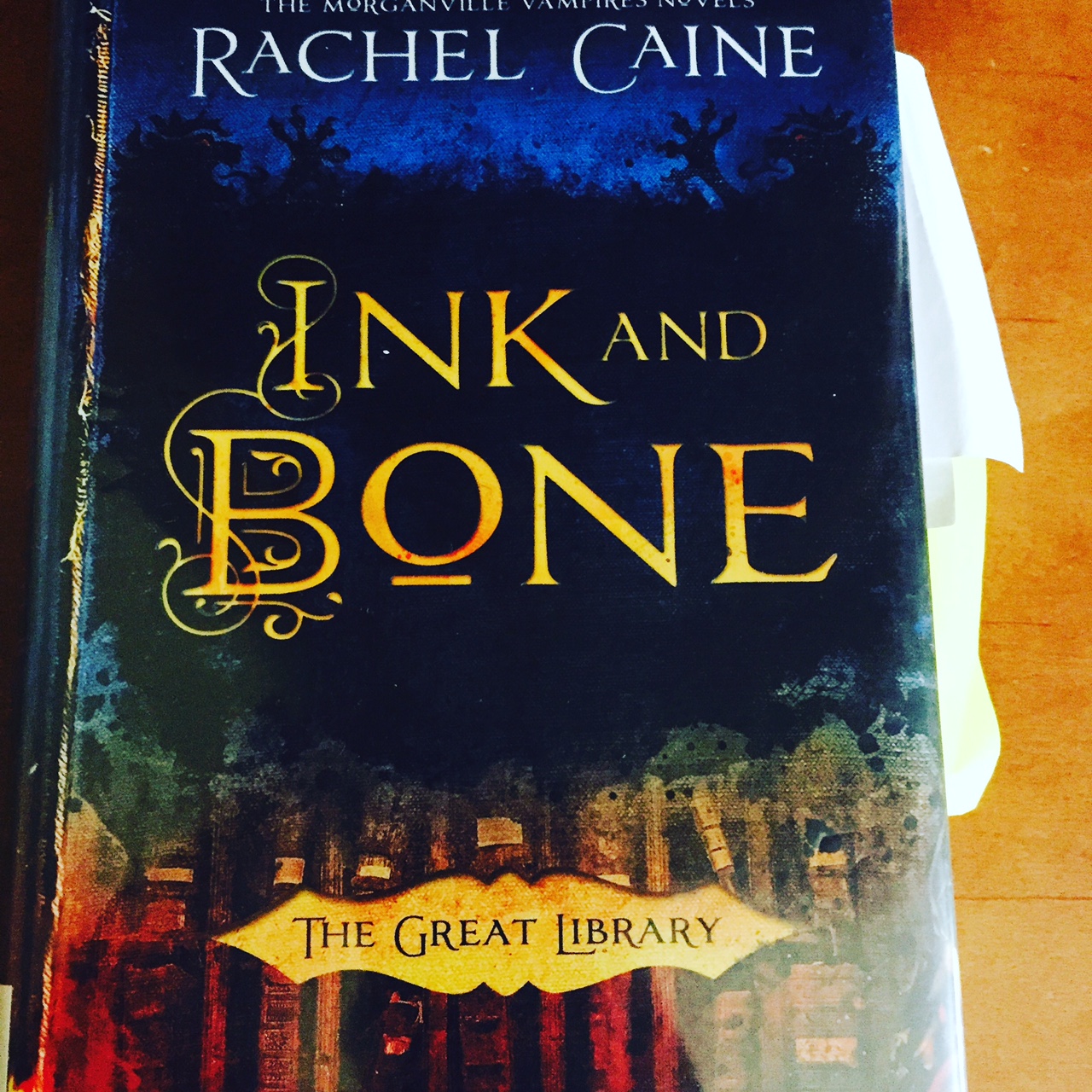
I finished Ink and Bone earlier this week. This is book one of Rachel Caine’s The Great Library series. This was a thought provoking read about what could have happened if the Great Library of Alexandria had survived; had kept Gutenberg’s printing press from existence; and had kept control of the dissemination of books and knowledge (making personal ownership of books illegal).

A truly terrifying and captivating read! The post-it notes mark all of the passages that reference the personal journals that the characters kept. Oh yes, the Great Library issued  electronic journals to its citizens. Parents were diligent about their children “writing” in their journals every night, and when citizens died, the journals would be seized for The Great Library to archive them.

Page 34: “..the Library provided them free on the birth of a child, and encouraged every citizen of the world to write their thoughts and memories from the earliest age possible. Everyone kept a record of the days and hours of their lives to be archived in the Library upon their deaths. The Library was a kind of memorial, in that way. It was one reason the people loved it so, for the fact that it lent them a kind of immortality.” 

Meanwhile, the Library also used the electronic journals to spy upon its own citizens. Really, really scary. And timely. These people should have kept handwritten journals, not electronic diaries! Perhaps a secret diary journal?

Ink-and-bone-rachel-cain
Ink and Bone by Rachel Caine

Thankfully, we still mostly have the right to be secure in our own papers. Can you imagine what the world would be like if we didn’t have that anymore? Chilling!

Authors Who Kept Notebooks

Such gems from W. Somerset Maugham’s A Writer’s Notebook! Notes from a genius. Written 121 years ago. Timeless (and in some cases, terrifying!).

  • 1896: “From the standpoint of pure reason, there are no good grounds to support the claim that one should sacrifice one’s own happiness to that of others.”
  • 1896: …”but the banker always wins.”
  • 1896: “Can the perfect adaptation of man to society ever take place? It may be that the sheer struggle for existence will be put an end to, but will that effect the end desired?”
  • 1896: “There are few minds in a century that can look upon a new idea without terror.”
  • 1896: “A moral code is accepted by the weak-minded; the strong form their own.”
  • 1896: “Everything in life is meaningless, the pain and the suffering are fruitless and futile. There is no object in life.”

I am always fascinated by notebooks and journals kept by authors. Oftentimes, they can be a pure glance into the state of the writer’s mind. There are parts equally dark and light, but artists are usually forthcoming about the extent of the darkness. There are no attempts made to sugarcoat things.

Book Quotes About Writing – “The Hawley Book of the Dead”

Loving this quote about writing from P.51 of “The Hawley Book of the Dead,” by Chrysler Szarlan.

Writing is a kind of magic. One person sits in a room alone and makes marks on a page that represent the images in her mind. Another person looks at those marks, weeks or months or a hundred years later, and similar images appear in that person’s mind. Magic.”

Fill your pages! Travel. Write. Index. Repeat. Make magic. That’s all.  

Create a free website or blog at WordPress.com.

Up ↑