Just passing through. Nothing to see here, folks.
It turns out I have been writing morning pages longer than I have been aware that they had a name for that! Julia Cameron’s Morning Pages were made news to me last December when I picked up Tim Ferriss’s “Tools of Titans.” Before then, I just referred to my writing practice as journaling, and the practice would occur sporadically throughout the day; according to my mood; or in the evening while I tried to play catch up from the day’s events. To be fair, although I have always kept a journal, I never followed a strict, first things first policy until I heard about Cameron’s morning pages practice and decided to give her way a try.
I still keep notes or journal throughout the day as the mood strikes me, but I do the morning pages work first as an active meditation, and to start my day off on the pattern and practice of taking care of myself first before engaging in work for others. This is me securing my own safety mask before I render help to others!
I have not done a ton of research yet into morning pages, but I am not surprised by the volume of testaments to the practice that I have read so far. Some people have gone as far as saying it is a religious experience for them – that they have found God speaking to them through their writing.
I can see that. The inner guidance and insight that comes from the morning pages practice certainly feels like it could be God, or the universe, trying to get through to me. I think that’s the big answer. Only through the quiet turning of looking inward can we get in tune and start to hear. What will a searching soul find? Will you be strong enough and wise enough to recognize what you need to change after your problems and issues are staring you in the face? Because after two weeks of the morning pages practice I was forced to to take some accountability and action for my own life’s choices and happiness because there was no getting around the fact that I had been writing about the same whine and agonizing over the same issue. It was a powerful moment. A life changing moment (and one for the better).
I don’t do traditional passive meditation. I can sit on the back porch on a chair and listen to the wind for a few minutes, and I guess that counts, but I haven’t incorporated it into my daily habits yet. Right now, writing my morning pages is where I put my time investment and from doing that I am able to start my day completely at peace and feeling strong. I feel that for my personality type, active meditations give me the best benefit, and writing by far is the most obvious fit. There are also plenty of active meditation moments throughout the day when I try to breathe and quiet my mind, such as exercising; preparing a meal; or when grooming.
Julia Cameron on Morning Pages in “The Miracle of Morning Pages”:
“Morning Pages are about action. Unlike conventional meditation, which may lull you out of taking action, the pages magnify our discontent, pointing out actions we could take. The pages tend to point out our many choice points. We are egged on to increase honesty and candor. Our lives become our own. We no longer sell ourselves out, giving our time and energy to others’ agenda. We have a choice whether to invest in others or ourselves. Investing in ourselves is novel for many of us.”
Because writing is an active exercise, I am more likely to become aware of changes to make or actions to take to move forward when I do the morning pages work. I agree with Cameron’s assessment of traditional meditation alone, in that I have found it to be true that it lulls me into what I feel is a dangerous spiritual complacency in the sense that yes, I am feeling good or peaceful, but in reality what that means is I’ve just taken the lazy man’s way out and adapted a coping mechanism to a problem so that I have made myself be “okay” with problems instead of making any real changes. I hate it when people don’t deal with problems, and I hate it when I’m guilty of avoidance too. I really strive to be accountable when I realize that action must be taken.
When I was transitioning out of the law firm, I used to say: “I don’t need a glass of wine. I need to change my life.” For me, coping mechanisms are dangerous because they let me get myself stuck in less than prime situations. Coping mechanisms are only to be used in the event of tragedy or other dire circumstances; or if I am just absolutely burning out, and that is how I view passive meditation. If meditation works for you, that’s great. I’m just telling you that meditation alone isn’t for me. I’ve tried it, and I get better benefits from active meditation through writing the morning pages daily.
That being said, now that I have successfully developed the sticky habit of doing the morning pages daily, I will try to combine that habit by stacking on five minutes after work in the late afternoon or early evening and see if I can make traditional meditation stick.
It will be interesting to see if I notice any changes after thirty days of stacking these habits! I have made a new habit tracker to begin tomorrow. The game is afoot.
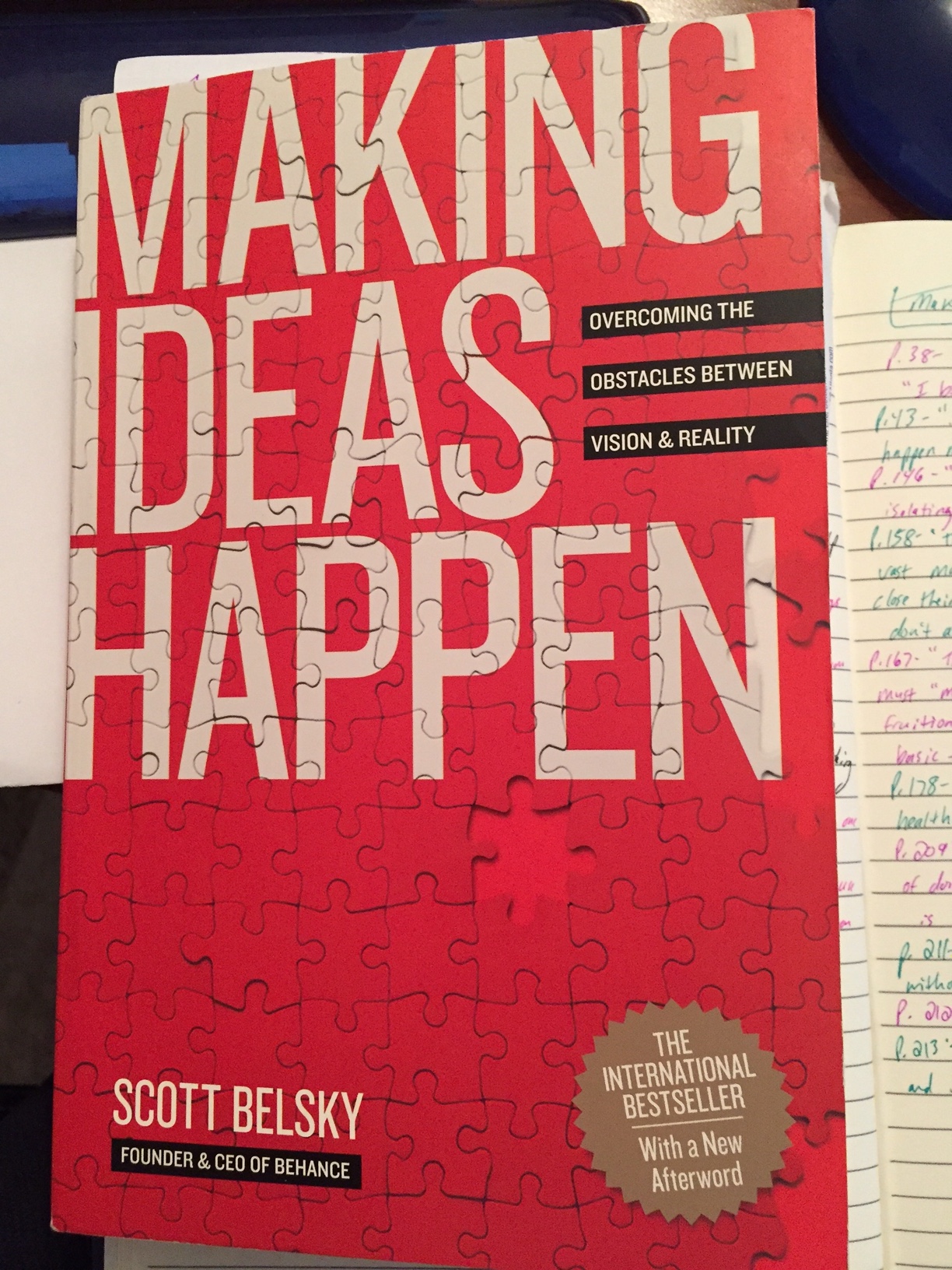
There are so many great quotes that I wrote in my reading journal from “Making Ideas Happen,” by Scott Belsky. P. 209 warns against the dangers of conventional wisdom. Conventional wisdom is often wrong. Entrepreneurs have all of the answers? No, says Andrew Weinreich on P. 211: “They’re just the ones willing to jump off a cliff without the answers.”
I also loved Weinreich’s quote from P. 212 about surviving the start-up life. The key is momentum. “When you stop moving, the music stops.” Yes. Such is life.
Arguably, the most valuable section of this book for me was reading about Action Steps and how Bob Greenberg, chairman of R/GA performs his morning ritual. He uses good old pens and a notebook to keep himself focused on tasks throughout the day. “I believe if you don’t write it down, it doesn’t register,” Greenberg is quoted on P. 38. That resonated with me so much!
Greenberg described his practice of moving old items over every morning. This very much describes the principles behind the development of the Work journal, by Stealth Journals! Your best chance at being productive every day at work is dependent upon your ability to identify your priority items every morning before you begin working.
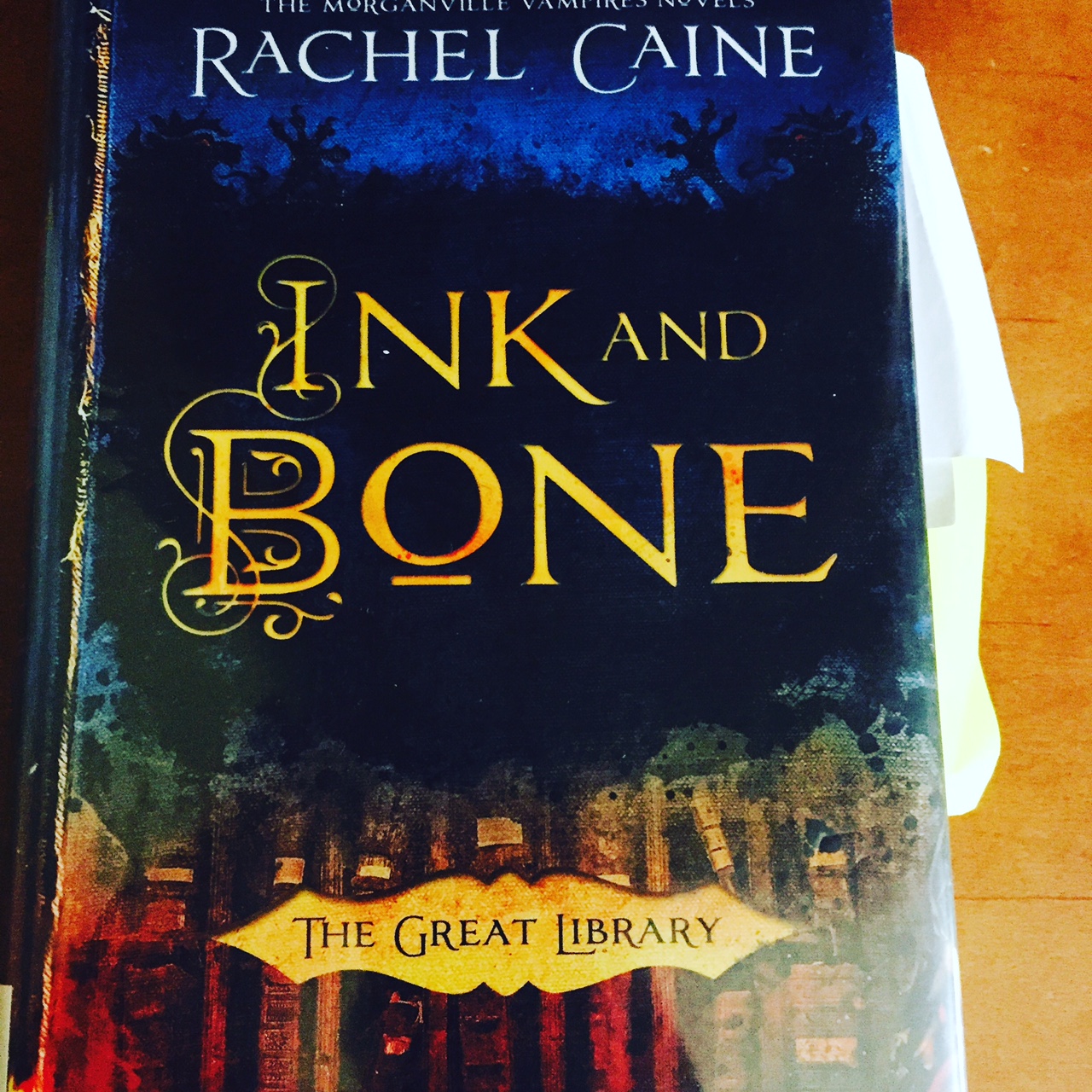
I finished Ink and Bone earlier this week. This is book one of Rachel Caine’s The Great Library series. This was a thought provoking read about what could have happened if the Great Library of Alexandria had survived; had kept Gutenberg’s printing press from existence; and had kept control of the dissemination of books and knowledge (making personal ownership of books illegal).
A truly terrifying and captivating read! The post-it notes mark all of the passages that reference the personal journals that the characters kept. Oh yes, the Great Library issued electronic journals to its citizens. Parents were diligent about their children “writing” in their journals every night, and when citizens died, the journals would be seized for The Great Library to archive them.
Page 34: “..the Library provided them free on the birth of a child, and encouraged every citizen of the world to write their thoughts and memories from the earliest age possible. Everyone kept a record of the days and hours of their lives to be archived in the Library upon their deaths. The Library was a kind of memorial, in that way. It was one reason the people loved it so, for the fact that it lent them a kind of immortality.”
Meanwhile, the Library also used the electronic journals to spy upon its own citizens. Really, really scary. And timely. These people should have kept handwritten journals, not electronic diaries! Perhaps a secret diary journal?

Thankfully, we still mostly have the right to be secure in our own papers. Can you imagine what the world would be like if we didn’t have that anymore? Chilling!
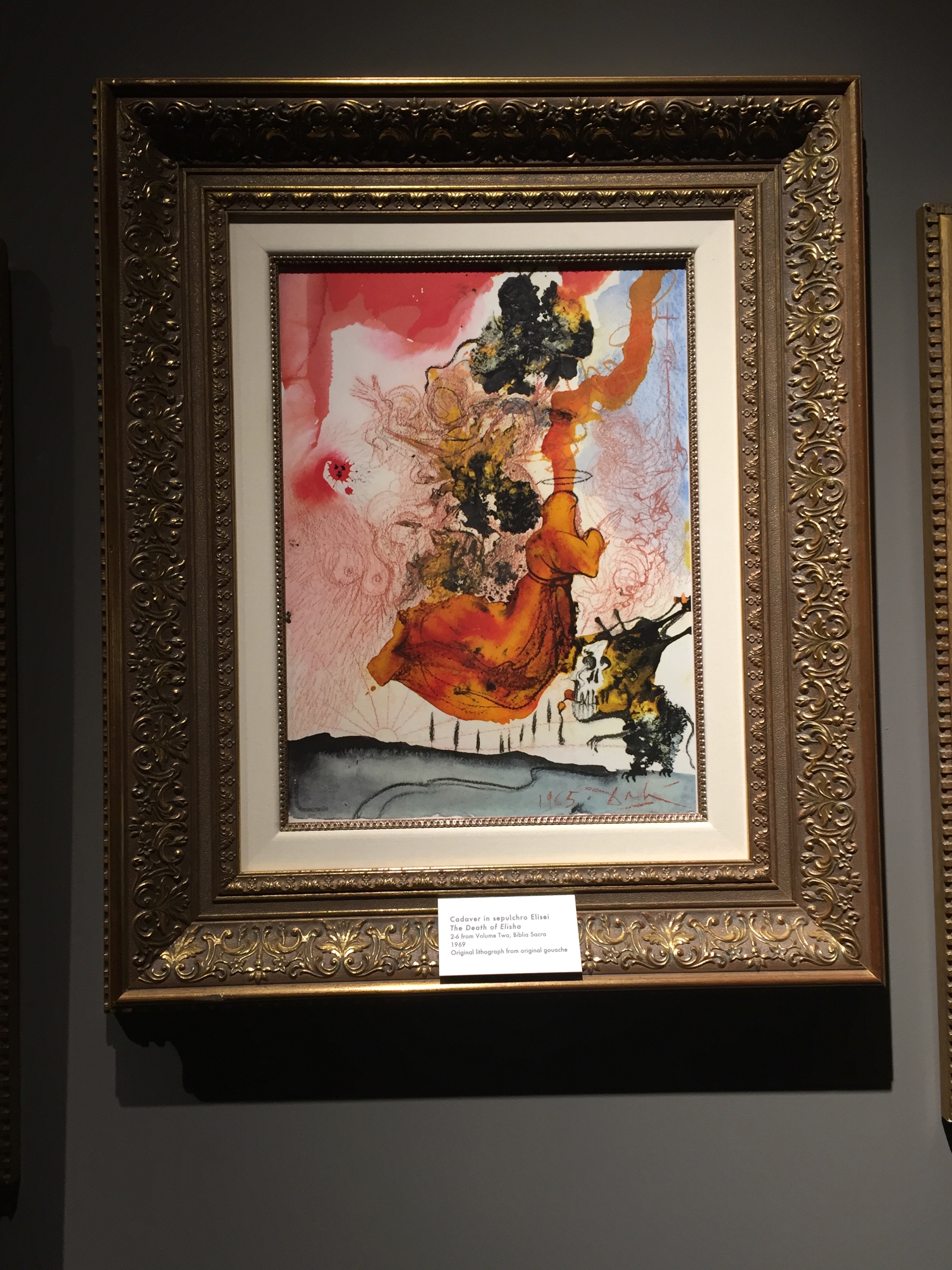
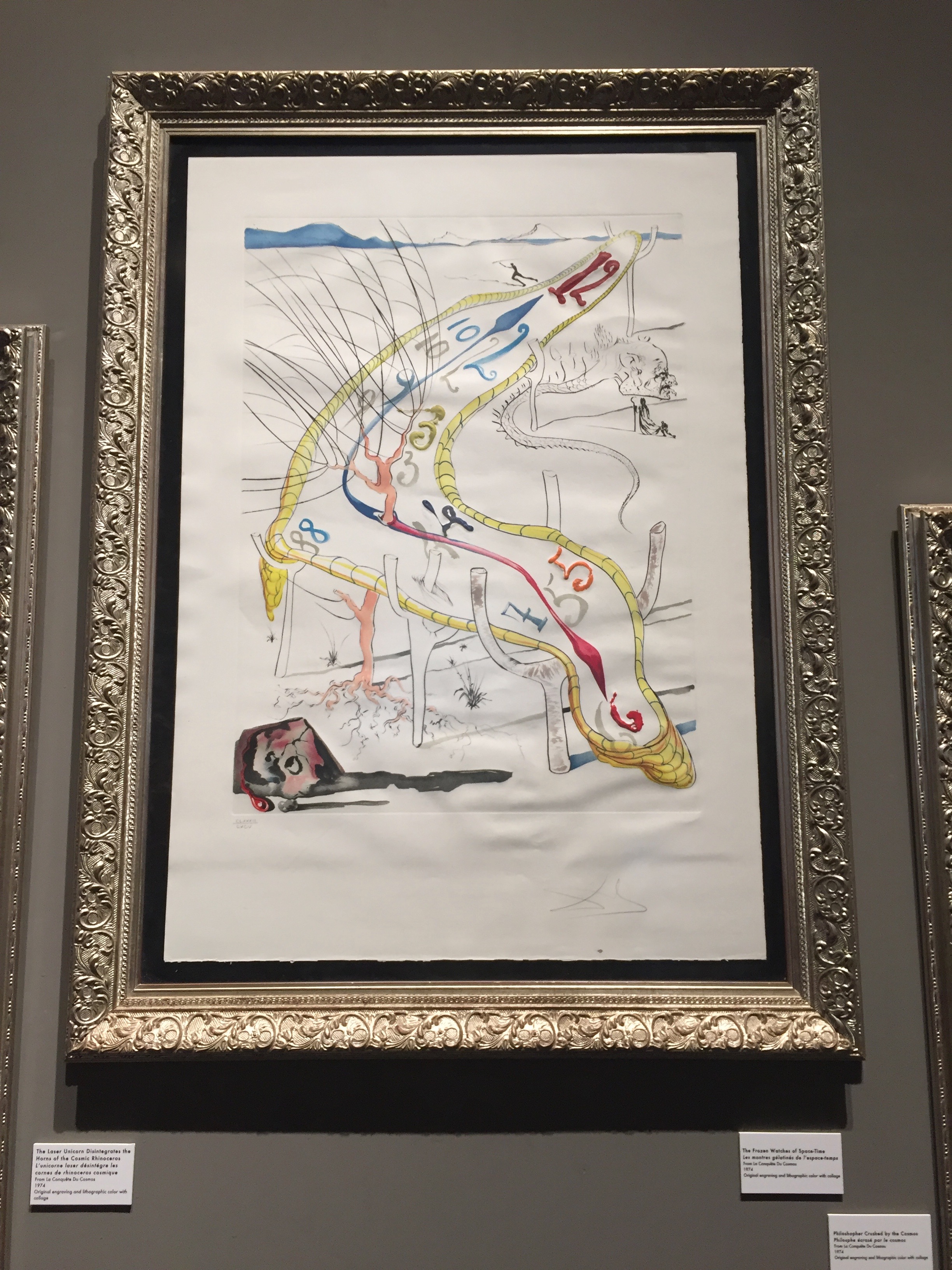
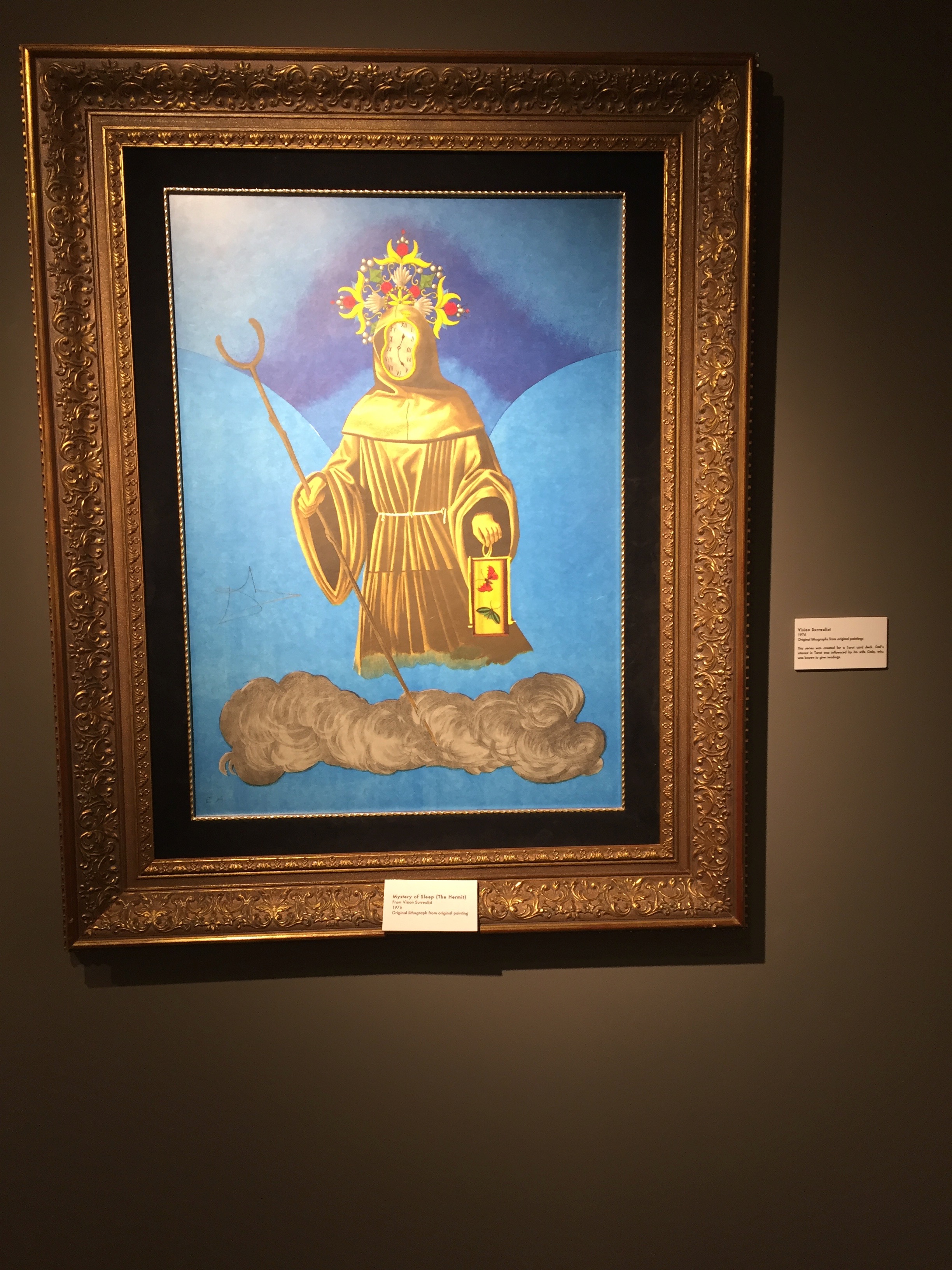
I had no idea that Salvador Dali lived (and worked) in Monterey in the 1940s. Apparently he was also an early Carmel Art Association member. What a treat of an exhibit!
Some selections from the Salvador Dali exhibit at the Museum of Monterey in Monterey, California:
Lithographs with religious themes (Dali was a devout Catholic)


Surreal works with some elements of my favorite theme (melting clocks)


As always, we log all of our adventures in our “Play” Journal by Stealth Journals. “Play” is an indexed book journal that should be used to record all of your good times!
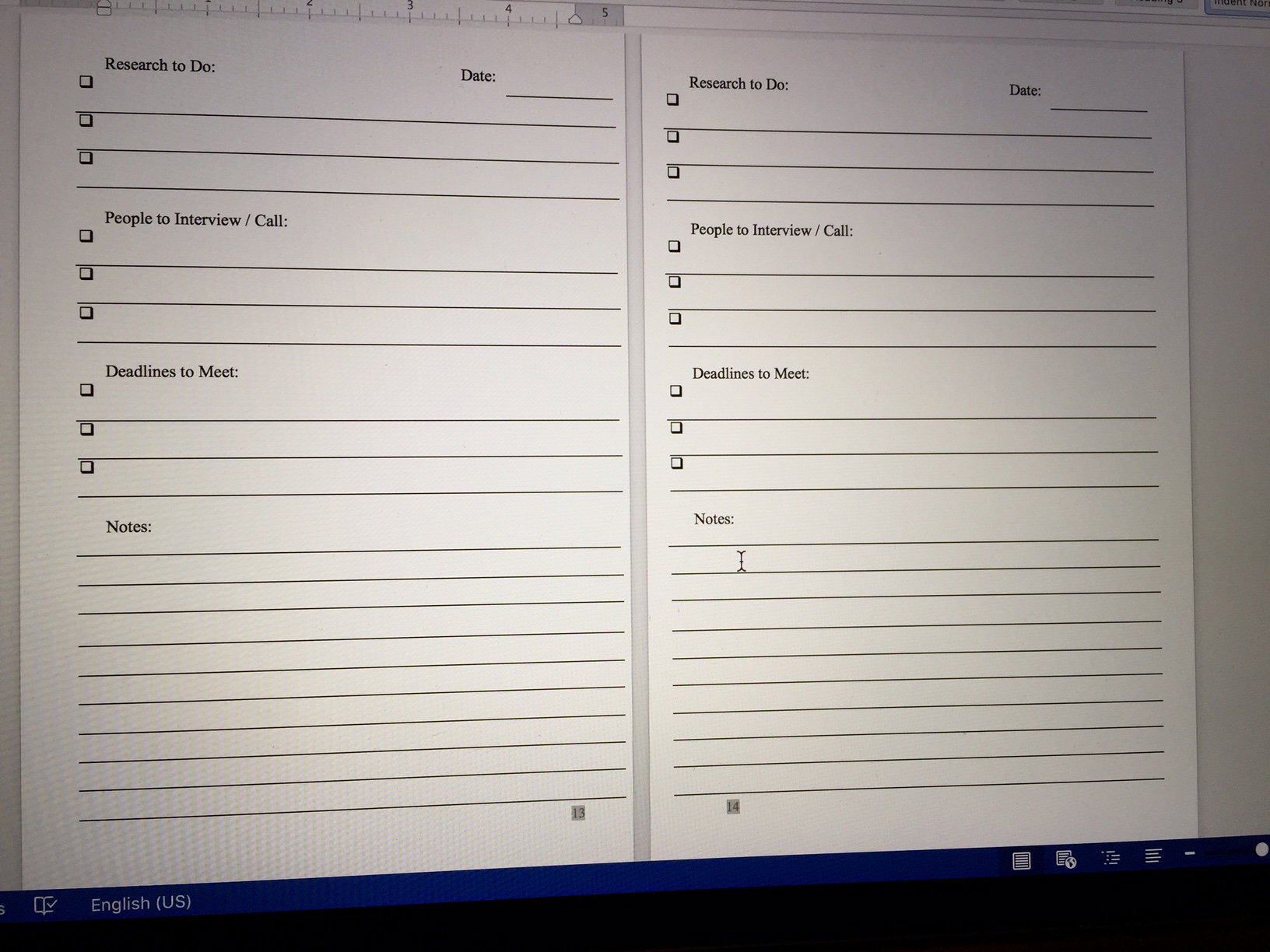
Who knew? I actually published two more books this year. One was a journal for paralegals, and the second is a journal for my fellow non-fiction writers. It can be purchased here: Amazon.


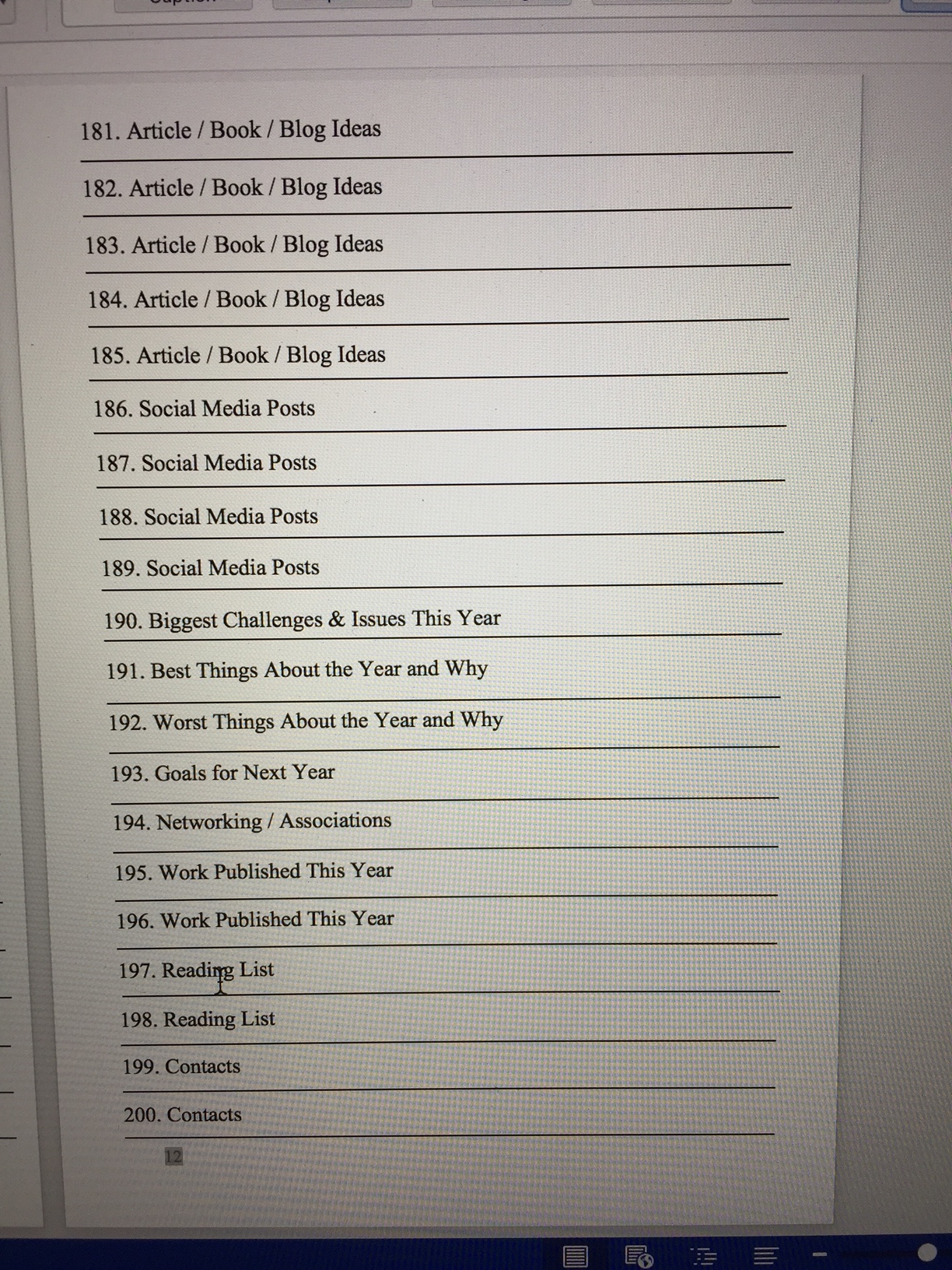
The index system is absolutely crucial to me for finding my notes.
Pictured below, is a sample of the daily content section.

Lastly, I made a special index section for you to keep track of important events and your progress throughout the year. Accountability much?


I hope you love it as much as I do, and that it keeps you on track. If you purchase, please drop me a line and give me your feedback!
J. N. Adam Memorial Hospital — Perrysburg, New York After determining that the loud, repetitive banging we were hearing was just a door blowing in the morning breeze, we approached the hospital entrance – on our guard…just in case Modified Nikon D100 (Near infrared capture) More of my work can be seen here J. N. Adam Hospital and Tuberculosis Sanitarium
via The Walk Up (2016) — infraredrobert
AMAZING WORK OVER HERE! Go check it out!!

This is the latest installment in the 44 Scotland Street Series. Much like the Isabel Dalhousie series, nothing much happens. This is not to say that the books are about NOTHING. Not so. They are about life. This is my favorite series by Smith.
Alexander McCall Smith sometimes seems to me to be to literature what the great Observational Comics are to comedy. Not always funny, per se, but masters at telling stories about “real” life. And how timely some of these stories are.
In this installment, Smith cracks wise a bit about political correctness, and how everything is out of bounds now “interdicted by self-appointed guardians of sensitivity.” Domenica and Angus have a conversation on which she remarks “Now we’ve come to expect that everybody we see wants to kill us.” A most interesting remark.
Smith is one of my favorite authors, and I think I have read just about every book he has published. Beautiful, beautiful, words.
I was nearly in tears when I thought one of the characters was dying. Although, the description of his last thoughts is perfect. If we must go, please let it be like this: Page 159 –
“He was aware of movement; some pressure on his arms, as if somebody were pulling him, and for a few moments he resented that there should be this intrusion. But then he felt sleep claim him, and all sensation drained away, faded, and he no longer cared. So this was what it was like to die: it was an abandonment, a giving up, an allowing of life to drain away. It did not mater, he thought. It did not matter.”
The Irene/Stuart relationship is getting interesting and very controversial. I was not in agreement with Stuart’s choice, but I bet many others are.
Lastly, a piece of advice from our friends across the pond: “Never eat at a restaurant called Momma’s.” Now that remark, I would normally have to take umbrage against. However, I have not eaten at any such establishment called “Momma’s,” although growing up, we often visited “Mama’s.” Well, obviously that’s just different.
Lovely time!

I read this book for the second time this year, and it was almost even more enjoyable! I highly recommend this one for those of you who like your literary fiction on the “haunted” side. I can’t help but be vaguely reminded of the animated “Hotel Transylvania” film franchises (which I enjoyed, thank you very much), although this really is not a romping good time at all (though it is not without hope and redemption).
The author can go a little surreal on you from time, and certainly does with the whole cat thing, but “The King of the Cats” in Chapter 3 is just about as perfect as it gets if you want to see an example of how to write the ordinary into sheer horror (how can a little kitty be scary, you ask? Just read.).
I have underlined so many passages, but I will leave you with this to chew on from Page 284:
“Most ordinary people, certainly, were monsters…They dreamed all their lives, and in almost every instance they settled for something less than what they dreamed. They took the job they could get, they married the person who would have them, they did the things they knew they could do without pain or humiliation. They lived haunted by the ends to come…They settled.”
If that doesn’t concisely sum up contemporary real-deal American Horror, I don’t know what does. “This is what we have. You do what you can do.”
Wow.