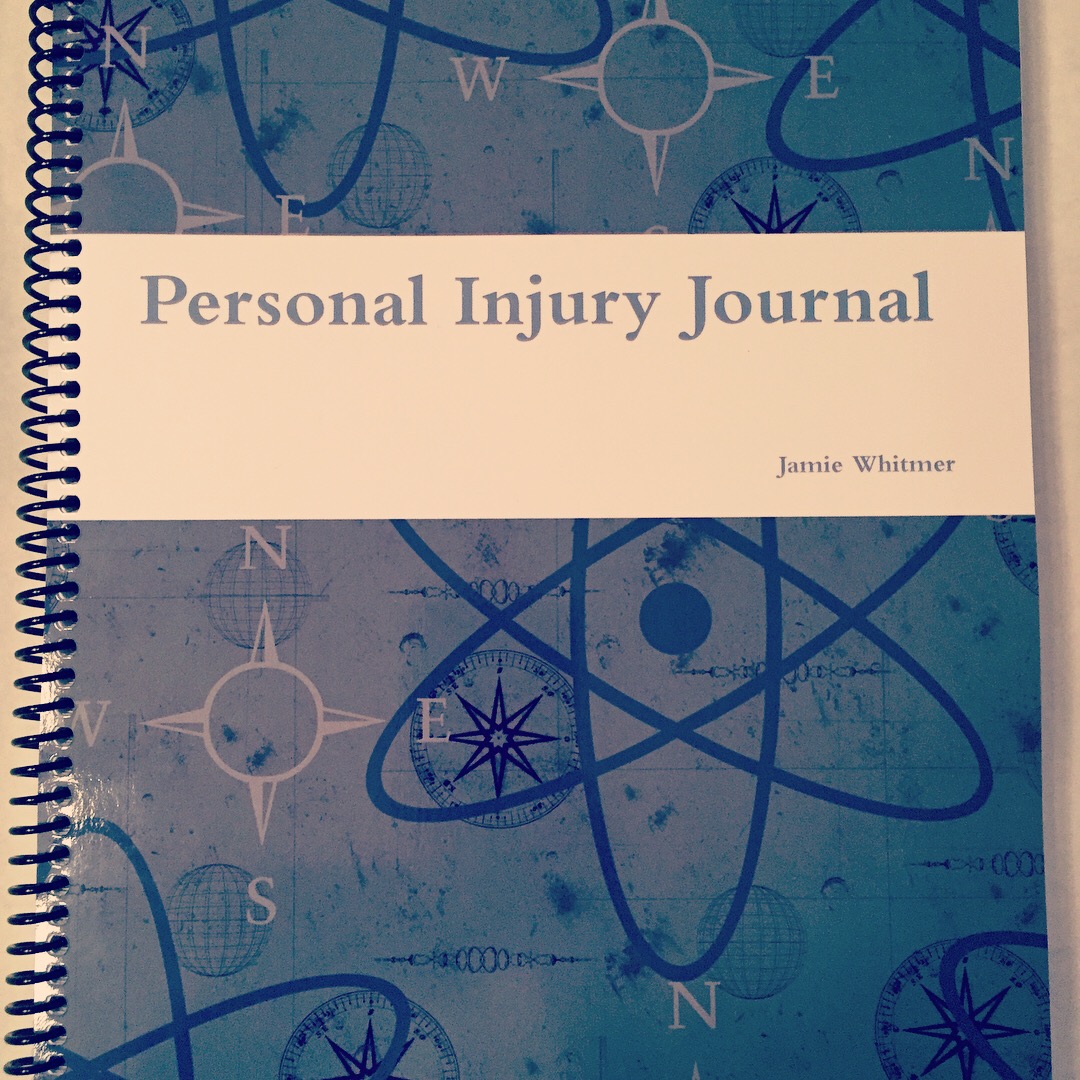
Personal Injury Journals for Plaintiffs’ Attorneys
Give your clients a tool that works as hard as you do. The Personal Injury Journal was created by Jamie Davis Whitmer when she was working as a personal injury litigation paralegal. Jamie has years of experience drafting demand letters and working directly with injured plaintiffs. What she discovered after thousands of client conversations was a consistent problem: most injured clients struggle to articulate the specific ways their lives have changed — and that vagueness costs them at the negotiating table.
The Problem It Solves
When it’s time to draft a demand letter or respond to discovery, clients rarely remember the details that matter most: where they treated, when they finished care, or how their daily life was disrupted. Vague answers lead to impersonal narratives, and impersonal narratives lead to lower settlements. If the story feels thin to your paralegal, imagine how it reads to an insurance adjuster feeding records into Colossus.
How It Works
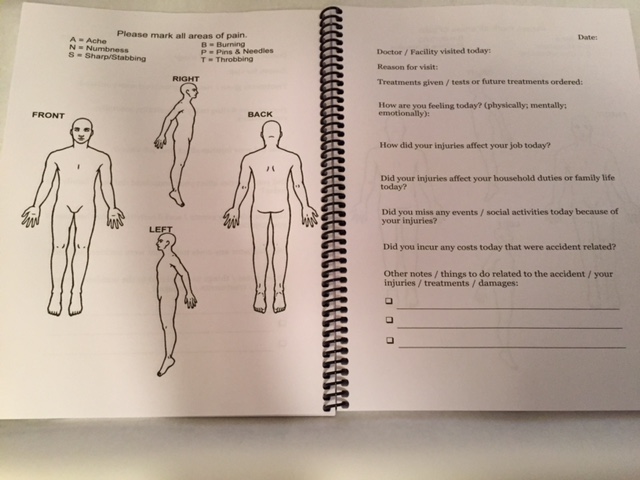
The Personal Injury Journal is best suited for clients following a standard treatment pattern: ER care, chiropractic, orthopedic, and potential surgery with recovery. Provided at intake as part of your welcome packet, it prompts clients to document their experience in real time — tracking treating facilities, recording how their daily activities have changed, and building a personal, detailed record of their suffering over the course of their case.
Think of it as an analog “Day in the Life” video. Every client has a unique story — the college student missing exams, the mother unable to care for her child — and specific details make those stories believable, sympathetic, and valuable.
Why Specifics Matter
Research cited in Daniel Pink’s To Sell is Human found that radiologists reviewed CT scans more thoroughly when a patient’s photo was included — they became less mechanical and more attentive simply by seeing the person behind the file. The same principle applies to adjusters, opposing counsel, and jurors. When you can cite chapter and verse of how a defendant’s negligence disrupted a real person’s real life, you force the other side to see your client as a human being — not just a set of medical records.
Who wants to go to trial against a client holding a journal full of specific, documented instances of how their life was turned upside down? Nobody. That’s a policy limits case.
Available Formats:
 Jamie Davis Writes