Search

Jamie Davis Writes

Author

jamiedaviswrites

Fun and Games at the Museum of Contemporary Art: A Look Inside My Play Journal

Making notes inside my Play Journal of some of the exhibits at the Museum of Contemporary Art in Chicago. I can always spot Francis Bacon a mile away, because some guy is always screaming his head off! 

Study for a Portrait, 1949
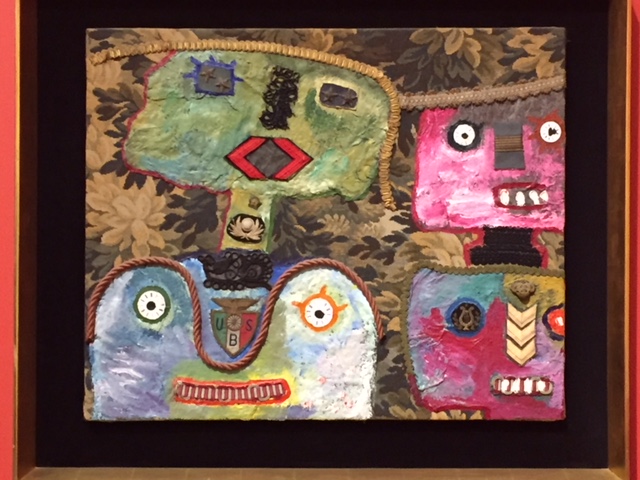
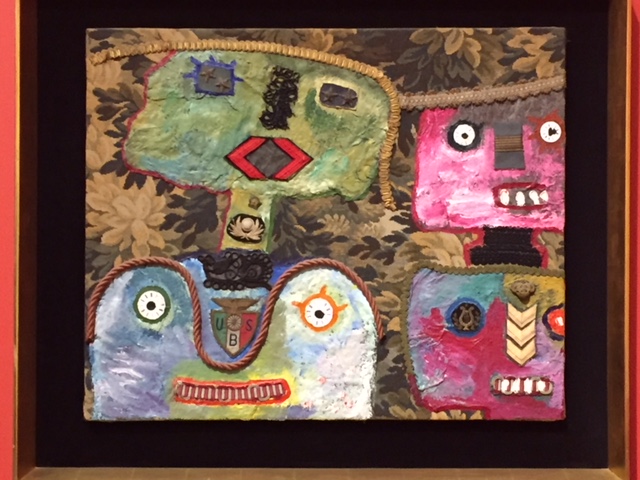
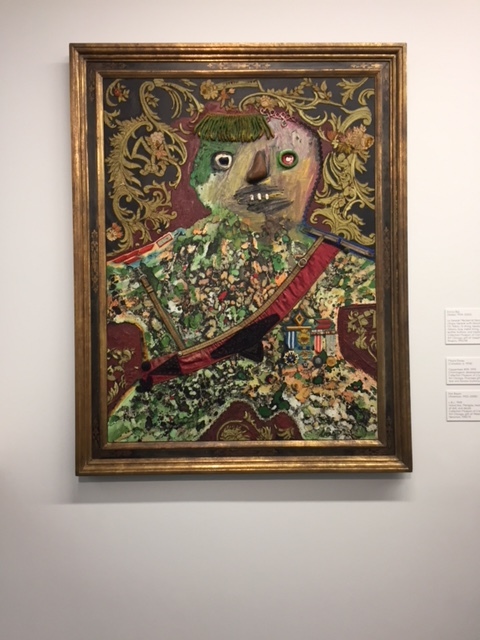
Encounter, 1966. Enrico Baj. This was my first time seeing works by Enrico Baj, and they were very interesting to study. I like the way he used actual medals for this collage of two generals.  
IMG_5509.JPG
Untitled, 1966. Lee Bontecou. I first saw works by Bontecou at this very museum in May of 2013. The steel; canvas; and lighting make a very powerful statement!
Les merveilles de la nature, Rene Magritte, 1953. I always love trying to interpret Magritte's work! Fish-human hybrids made of stone. What is he trying to tell us?!
Les merveilles de la nature, Rene Magritte, 1953. I always love trying to interpret Magritte’s work! Fish-human hybrids made of stone. What is he trying to tell us?!

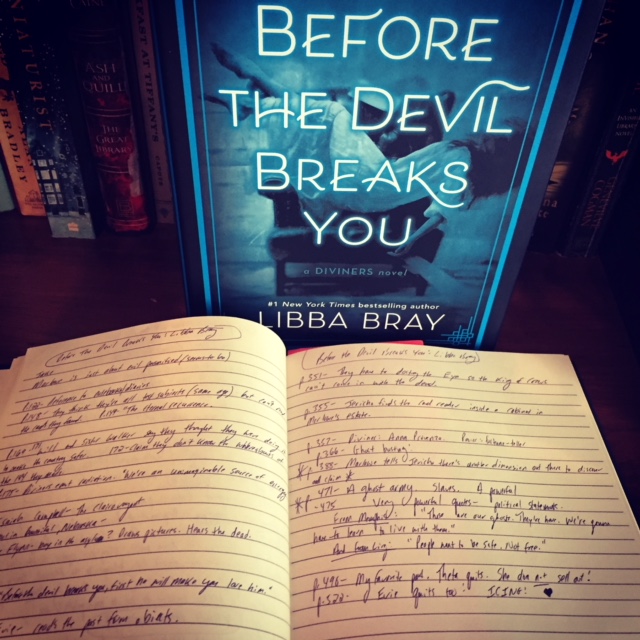
Notes From a Reading Journal: Before the Devil Breaks You, by Libba Bray 

Notes from a Reading Journal

Before the Devil Breaks You” is Book 3 in the 4-part Diviners series by Libba Bray.

There is a lot going on in Book 3! I adore this 1920s paranormal series! Libba Bray acknowledges that at the time she was writing this book, there was a lot going on in America politically, and I think she strikes the perfect balance of writing for entertainment without preaching politically. That’s a hard thing to do, by the way. Having just finished Stephen and Owen King’s “Sleeping Beauties,” even recognized masters get this wrong. There is entertainment, and then there are political pieces masked as entertainment. Ahem. But I digress…  

First, the “fun” elements in the plot of “Before the Devil Breaks You.” The Diviners visit an asylum to hunt ghosts, and there is ghostly activity around Manhattan that might remind the reader of the movie “Ghost-Busters”. I also enjoyed learning the lingo from that time period. The characters say such phrases as: 

         “You jake?”

         “Strictly top-drawer”

         “Baby Vamp”

         “And how!”

         “On the level”

         “Let’s ankle”  

Now on the darker fare. The King of Crows is back with an army of the dead. I’m still trying to figure out what the “Eye” is, but it sounds to be some sort of portal between Earth and another dimension (seemingly the land of the dead or wherever The King of Crows comes from. Hell? Because without question, The King of Crows is a demon). I think the “Eye” is going to be the focus of the last book as far as the Diviners are supposed to find it and destroy it, thus finally closing the entry door of Earth to The King of Crows. I got the impression that it has to do with Marlowe and his quest to discover and conquer another dimension. Marlowe is just about evil personified on Earth!

In the book, we delve deeper into Project Buffalo’s roots inside the Department of Paranormal, a former government agency. This agency’s purpose was to engineer Diviners in the womb, in an attempt to breed a race of super-powered Americans. Just as in the real 1920s Eugenics Record Office at Cold Spring Harbor Laboratory on Long Island, which Bray writes in her author’s note, “supported by Harrimans, Carnegies, and Rockefellers.” This story line is absolutely terrifying and evil, and even more so because it is based on reality!

We find out that Evie; Theta; Henry; Sam; Ling; Memphis; and Isaiah were all manufactured to have super powers that were derived by administering Marlowe’s serum to their mothers. The specific power that would develop as a result of administering the serum seems to be something that the agency could not control. 

The portrayal of the Manhattan State Hospital for the Insane was inspired by a fictional amalgam of real New York Kirkbride asylums and their cemeteries, such as Ward’s Island; Roosevelt Island; and Hart’s Island. I liked the mention of Nellie Bly’s 1887 “Ten Days in a Mad-House” to demonstrate how investigative journalism led to sweeping reform in the state’s asylums, and led to much better care of the mental ill by the 1920s. However, there were still terrifying things going on, and one of the scariest things was sterilization under the Supreme Court’s 1927 ruling in Buck v. Bell. 

Quotes I Collected in my Reading Journal:

·      Page 12: “When you talk about seeing ghosts, most people assume you’re either crazy or drunk or both.”

·      About writing, from Ling’s perspective. Page 51: “Ling cracked open the notebook, inhaling the scent of good leather and of the possibilities lurking in all those blank pages.”   

·      P. 185: “Before the Devil breaks you, first he will make you love him.”

·      By Memphis, P. 475: “These are our ghosts. They’re here. We’re gonna have to learn to live with them.” And from Ling, “People want to be safe. Not free.”

Other revelations? Two main characters are murdered. We finally find out who Blind Bill Johnson is, and that’s a great story line (There once was a Diviner who could pull life from things…)! Evie and Theta both quit their show-business jobs rather than be forced to be controlled by their bosses, which were very inspiring actions. Shame about Jericho and Evie, though. I’ll leave it at that. I wish that part of the story didn’t have to happen.  — Jamie Whitmer

Morning Pages or Meditation? 

It turns out I have been writing morning pages longer than I have been aware that they had a name for that! Julia Cameron’s Morning Pages were made news to me last December when I picked up Tim Ferriss’s “Tools of Titans.” Before then, I just referred to my writing practice as journaling, and the practice would occur sporadically throughout the day; according to my mood; or in the evening while I tried to play catch up from the day’s events. To be fair, although I have always kept a journal, I never followed a strict, first things first policy until I heard about Cameron’s morning pages practice and decided to give her way a try.    

I still keep notes or journal throughout the day as the mood strikes me, but I do the morning pages work first as an active meditation, and to start my day off on the pattern and practice of taking care of myself first before engaging in work for others. This is me securing my own safety mask before I render help to others!

I have not done a ton of research yet into morning pages, but I am not surprised by the volume of testaments to the practice that I have read so far. Some people have gone as far as saying it is a religious experience for them – that they have found God speaking to them through their writing.

I can see that. The inner guidance and insight that comes from the morning pages practice certainly feels like it could be God, or the universe, trying to get through to me. I think that’s the big answer. Only through the quiet turning of looking inward can we get in tune and start to hear. What will a searching soul find? Will you be strong enough and wise enough to recognize what you need to change after your problems and issues are staring you in the face? Because  after two weeks of the morning pages practice I was forced to to take some accountability and action for my own life’s choices and happiness because there was no getting around the fact that I had been writing about the same whine and agonizing over the same issue. It was a powerful moment. A life changing moment (and one for the better).

I don’t do traditional passive meditation. I can sit on the back porch on a chair and listen to the wind for a few minutes, and I guess that counts, but I haven’t incorporated it into my daily habits yet. Right now, writing my morning pages is where I put my time investment and from doing that I am able to start my day completely at peace and feeling strong. I feel that for my personality type, active meditations give me the best benefit, and writing by far is the most obvious fit. There are also plenty of active meditation moments throughout the day when I try to breathe and quiet my mind, such as exercising; preparing a meal; or when grooming.    

Julia Cameron on Morning Pages in “The Miracle of Morning Pages”:

“Morning Pages are about action. Unlike conventional meditation, which may lull you out of taking action, the pages magnify our discontent, pointing out actions we could take. The pages tend to point out our many choice points. We are egged on to increase honesty and candor. Our lives become our own. We no longer sell ourselves out, giving our time and energy to others’ agenda. We have a choice whether to invest in others or ourselves. Investing in ourselves is novel for many of us.”

Because writing is an active exercise, I am more likely to become aware of changes to make or actions to take to move forward when I do the morning pages work. I agree with Cameron’s assessment of traditional meditation alone, in that I have found it to be true that it lulls me into what I feel is a dangerous spiritual complacency in the sense that yes, I am feeling good or peaceful, but in reality what that means is I’ve just taken the lazy man’s way out and adapted a coping mechanism to a problem so that I have made myself be “okay” with problems instead of making any real changes. I hate it when people don’t deal with problems, and I hate it when I’m guilty of avoidance too. I really strive to be accountable when I realize that action must be taken.

When I was transitioning out of the law firm, I used to say: “I don’t need a glass of wine. I need to change my life.” For me, coping mechanisms are dangerous because they let me get myself stuck in less than prime situations. Coping mechanisms are only to be used in the event of tragedy or other dire circumstances; or if I am just absolutely burning out, and that is how I view passive meditation. If meditation works for you, that’s great. I’m just telling you that meditation alone isn’t for me. I’ve tried it, and I get better benefits from active meditation through writing the morning pages daily.

That being said, now that I have successfully developed the sticky habit of doing the morning pages daily, I will try to combine that habit by stacking on five minutes after work in the late afternoon or early evening and see if I can make traditional meditation stick.

It will be interesting to see if I notice any changes after thirty days of stacking these habits! I have made a new habit tracker to begin tomorrow. The game is afoot. 

Haunted Asylums Journals

Sharing a sample Handmade Haunted Asylums Journal made from photos of an investigation of St. Albans Sanatorium in Radford, Virginia.

The story inspiration of the journal is as follows:

Once upon a time, a younger version of myself set off on an adventure to explore abandoned insane asylums and prisons.  My first book, Haunted Asylums, Prisons, and Sanatoriums was born. But there were still stories to tell. Somehere deep within the innards of an abandoned insane asylum in the Northeastern United States, I made a discovery…

A handmade patient’s journal, taped and stapled together using a culmination of whatever materials were available during art therapy. There were envelopes, photos, and assorted charms hidden within the book.

What you hold in your hands is a copy inspired by the original patient’s journal. Peppered by color photos taken during the course of my own explorations into abandoned asylums and prisons, the journal also features envelopes for holding your treasures (one has been started for you). I have upcycled hardcover books and given them new life with each creation, making each journal a truly one-of-a-kind handmade book.

I hope that it inspires you to document a chapter in your own journey. Create some madness. Make something for yourself. Escape the prison of your own mind. Write your own book. – Jamie Davis Whitmer

Pressing Play: A Look Inside My Play Journal (Chihuly)

Making note inside my Play Journal of the Dale Chihuly exhibit at the Morean Arts Center in St. Petersburg, Florida. It very much reminded me of the exhibit we saw many years ago in Oklahoma City (that is a good thing – fond memories). 

chihuly-st-pete1.JPG
Chihuly-blue.JPG
chihuly-st-pete2.JPG
chihuly-st-pete3.JPG
chihuly-st-pete4.JPG

This time, we caught some of the movie, and I loved hearing about the Jerusalem installation. Very uplifting exhibit! I had forgotten how powerful light and color could be. I had forgotten the magical brilliance of all of it. I won’t for awhile again, now. Like cranes that create, and then erase themselves from the sky.

— Jamie Whitmer

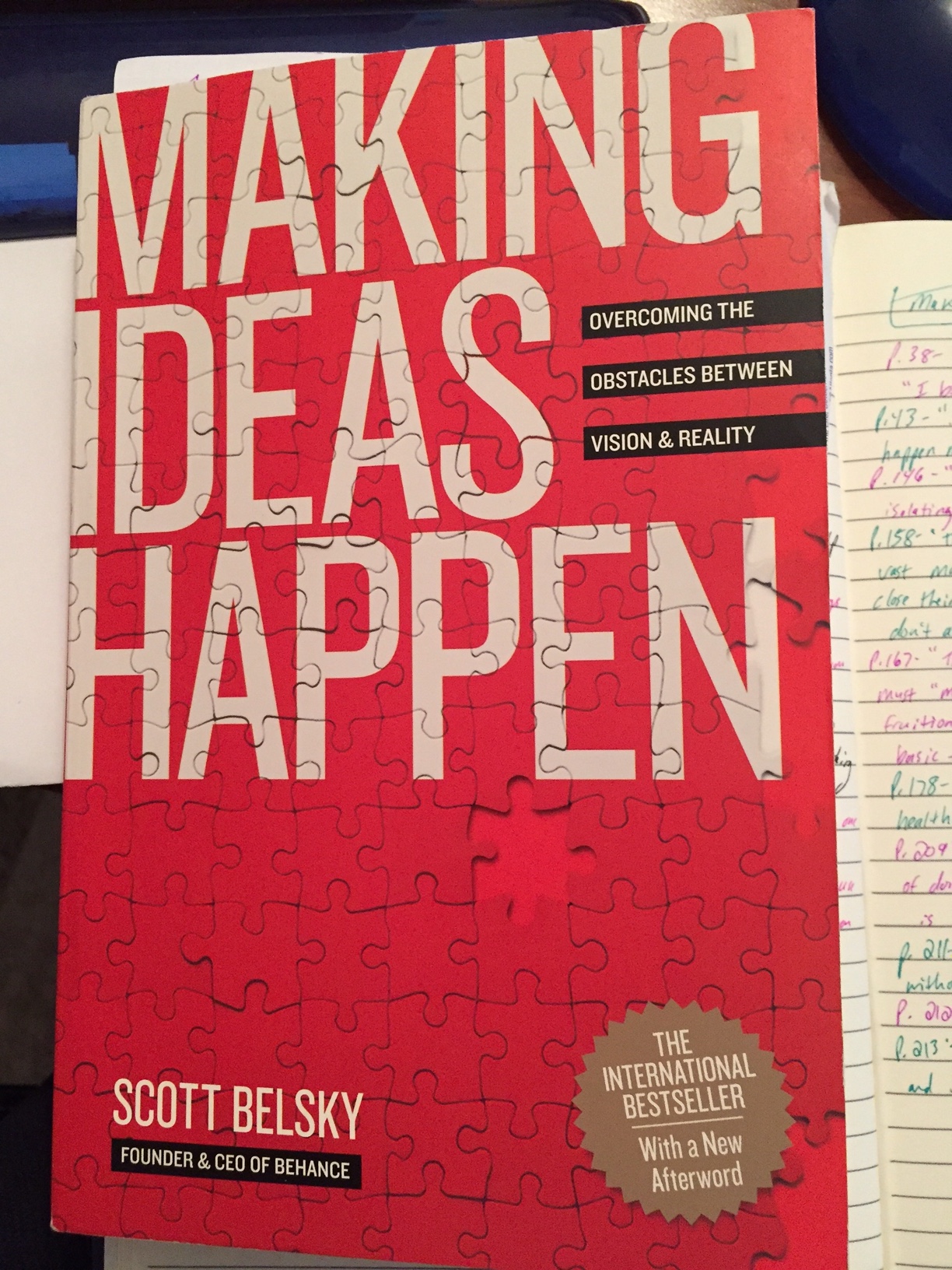
Making Ideas Happen, by Scott Belsky – Another Argument for Using a Work Journal

There are so many great quotes that I wrote in my reading journal from “Making Ideas Happen,” by Scott Belsky. P. 209 warns against the dangers of conventional wisdom. Conventional wisdom is often wrong. Entrepreneurs have all of the answers? No, says Andrew Weinreich on P. 211: “They’re just the ones willing to jump off a cliff without the answers.” 

I also loved Weinreich’s quote from P. 212 about surviving the start-up life. The key is momentum. “When you stop moving, the music stops.” Yes. Such is life. 

Arguably, the most valuable section of this book for me was reading about Action Steps and how Bob Greenberg, chairman of R/GA performs his morning ritual. He uses good old pens and a notebook to keep himself focused on tasks throughout the day. “I believe if you don’t write it down, it doesn’t register,” Greenberg is quoted on P. 38. That resonated with me so much! 

Greenberg described his practice of moving old items over every morning. This very much describes the principles behind the development of the Work journal, by Stealth Journals! Your best chance at being productive every day at work is dependent upon your ability to identify your priority items every morning before you begin working. 

Pages From a Secret Diary Journal: Daniel Pink’s “Don’t List”

Confessions from the pages of a secret diary journal are pictured below. We all have way too many things on our weekly “To Do” list. Why not take a lesson from Daniel Pink and start your week with a “Don’t List?!” What a wake-up call!

Recently, a morning journaling pages exercise was done with Daniel Pink’s “Don’t List” project. The exercise of making a “Don’t List” is very freeing. The “Don’t List” is a conscious reminder of what’s really important and what we can do to take back some control over our daily lives and work flow. 

daniel-pink-dont-list

Some favorites from the “Don’t List” pictured above included:

1. Don’t be in such a rush to start your day that you don’t start first by doing your morning journaling pages. 

2. Don’t be distracted by the phone while working. Turn the ringer off. Return calls only after you have met your top three work tasks for the day. 

3. Don’t take meetings when the purpose can be accomplished by having a short call instead. 

This secret diary journal can be purchased here. 

Keeping a Reading Journal

Keeping a Reading Journal

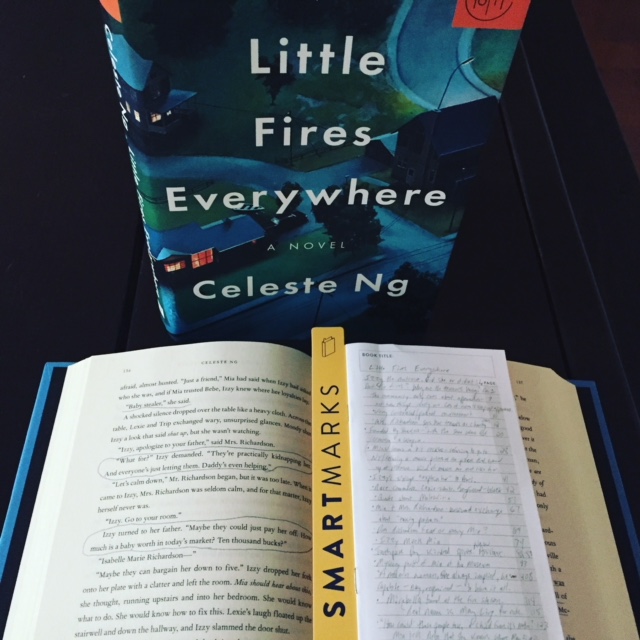
Do you keep a reading journal? I do! I am currently using one of our secret diary journals to keep track of all my book details. I do use Goodreads, but I know from experience that you can’t trust a third-party to keep your records (you never know when the company could decide to fold and all of your records could be lost) or manage your personal details, so I also keep a master spreadsheet of books I’ve read, along with a few notes, as well as a reading journal. 

Pictured below are some sample pages that I use in my indexed reading journal. I like to keep a written record of some book quotes that particularly strike me. This list is from Mark Haddon’s “The Curious Incident of the Dog in the Night-Time.” I keep the index updated with the title of the book and date read or noted. If I REALLY loved something, I will also tab out the indexed reading journal so it stands out to me even faster when I go to search later. 

book-quotes-reading-journal

I also keep a list of anticipated book releases for the year, with space to highlight and note when I have pre-ordered. I just ordered Rachel Caine’s third installment of The Great Library Series, “Ash and Quill” this morning, and I am SUPER EXCITED ABOUT IT! The anticipated release date is July 11. Other books that I am eagerly awaiting for the rest of this year include: Sleeping Beauties (Stephen King and Owen King, expected release date: 9/26/17); Before the Devil Breaks You (Libba Bray, The Diviners #3, expected release date: 10/3/17); After the End of the World (Jonathan L. Howard, Carter & Lovecraft #2), expected release date: 11/14/17); and The Lost Plot (Genevieve Cogman, The Invisible Library #4, expected release date: 1/8/18).

reading-journal-anticipated-releases

I also manage and index a master list of “Must Reads” in my reading journal for the year, to keep better focused on what I for sure want to read for the year versus the Goodreads everything I ever marked to read list. I keep my working “must read” book list small, and will only update it once I have completed the 10 or so “must read” items. 

reading-journal-must-list

Lastly, I also keep a running list in my reading journal of books read for the year. I am already up to 50 for the year, and that’s about right for me. The picture below is the beginning of the list, and the items that I have highlighted are books that I particularly loved. I will also use highlighting on my master spreadsheet in case I want to go back and search that way to find authors I may want to research for composing other “must read” book lists! 

reading-journal-books-read

Yes, I am an obsessed (but highly organized) reader! And I love it. 

Ghost Hunter’s Journal Now on Sale on Amazon

The Ghost Hunter’s Journal is a softcover ruled, indexed notebook journal that contains 200 pages to help keep you organized when documenting all of your ghost adventures. You can purchase your copy for just $12.99 on Amazon!

Ghost-Hunter's-Journal
Ghost Hunter’s Journal

The indexing system aids in reflection and planning throughout the year. The pages contain sections for the Who / What / When & Where details of your ghost hunts; followed by sections for: hotspots of the area and building that you are investigating; legends & lore; equipment used; and weather. The following page contains a full section for your notes.

The last few pages of the indexed book journal come with marked pages that have been indexed for you. Sample topics include: Best of (every month); Most Overrated; Equipment to Buy; Places to Visit – Bucket List (with one page completed as a suggested travel list based on my own travel research from my first two books).


Ghost-Hunter's-journal-interior-pages
Interior pages of the Ghost Hunter’s Journal, with bonus index and sample content pages.

Make sure to check out P. 197 for a recommended beginning bucket list of paranormal places to explore! I included places investigated for America’s Most Haunted Hotels and Haunted Asylums, Prisons, and Sanatoriums.

Ghost-hunter's-journal-bucket-list

Each indexed book journal features 200 ruled pages that are numbered for your ease of use. The numbered pages with an index will help keep you organized and make it easy to find your important entries. To really make your brain sing, we recommend that you use tabs and update your book journal’s index as necessary immediately after you have completed your journaling.

Specs: black and white interior ink, 200 ruled, indexed, and numbered pages.

Create a free website or blog at WordPress.com.

Up ↑